Tag Archive | "Richmond"

Tags: , , , , , , , ,

Does First Fridays Art Walk face sketchy future and is racial tension a factor?

Posted on 04 July 2011 by admin

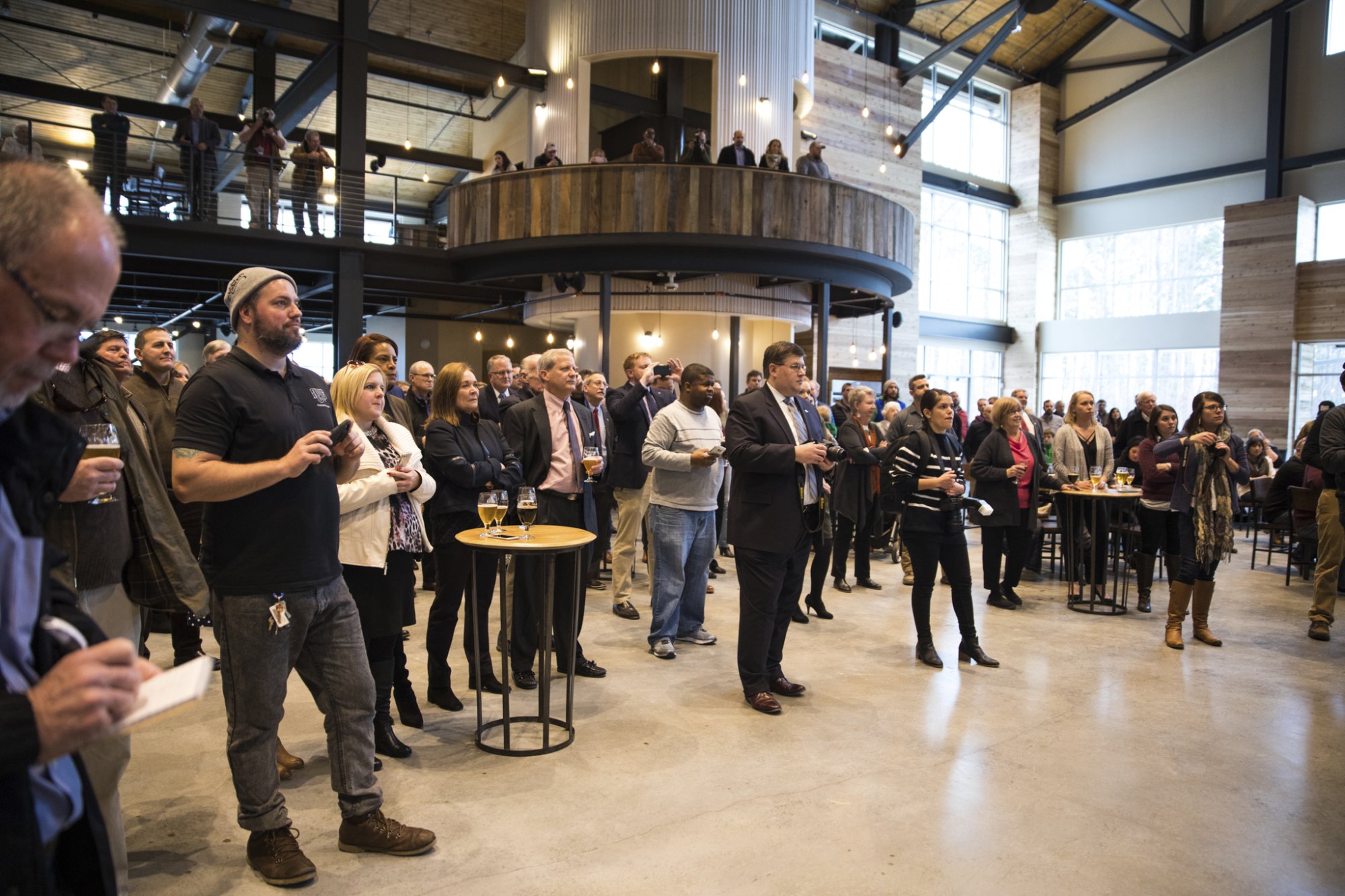
Were you at the two most recent Art Walks? There were about 15 fights at the most recent one, and a heavy police presence brought an intense vibe to the event. An event that has revitalized downtown Richmond now stands threatened by its own success, and by the age-old curse where we inadvertently ruin the great things that happen to us. Issues of race need to be addressed, and were clearly present at the last events.

The most recent First Fridays Art Walk holds a perfect magnifying glass over the problems we face moving forward and evolving as a city. There have been quite a few public reactions to the two most recent Art Walks.

Many responses have been racially charged, although I have seen a few public comments begging the city not to make this a race issue. Yes, we should use caution. Because we want to make sure EVERYONE feels welcome at First Fridays.

I think we would be better off addressing this issue, however uncomfortable it is, and then moving forward to fix prejudices of racism and classism. The Elephant in the Room only feeds on denial.

This is not about age, this is about race and centuries old tension in Richmond. I have seen a lot of people latching onto this growing idea that the “problems” and “skirmishes” at First Fridays are all coming from the “youth.”

When did everyone in Richmond become such an expert on age identification?

Yes, there are definitely more kids than there used to be, but in reality there are also more black people at First Fridays than there used to be.

Apparently, it is easier to say, “No, this isn’t a race issue, this is an age issue.”

Well, be warned, denial never fixes problems.

I call Bullshit. Granted, there were some underage kids there. There were also a lot of adults.

Here comes the elephant.

Several people have commented that they will not be returning to First Fridays. Several comments have been made, dramatizing the demise of First Fridays.

Many of the problems we’ve seen have only escalated over the past couple of years. We don’t need to ask how to salvage First Fridays, but rather, how to imagine where it goes in its next level of development.

It is unfortunate that cops have to break up crowds of people watching a dance exhibition (of random participants) outside of Backstage, or any other place where music is being played or made and people want to dance.

The cops have to do it because a crowd impedes the flow of traffic. They wouldn’t have to do it if Broad Street was blocked off though.

Many people have said that the event had a weird vibe to it. I was there for more 4 hours, from 7 p.m. to around midnight.

I had a great time. I did feel some stress because of all the police and because there were a lot of people just walking up and down the street. Up and down up and down up and down.

I do like that police are there breaking up fights. There were 15 fights broken up that night, a police officer said.

No guns. No arrests. One kid was beaten pretty badly, but ran off with his friends before the ambulance arrived.

People are reporting that there were fights in front of their galleries regardless of all the cops on the streets.

So the new First Fridays crowd is more intense. And this is a point that is statistically proven.

There have been threats made to police and a bunch of fights. When the crowd at First Fridays was predominantly white, there weren’t fights. The crowd of late has been predominantly black, and now there are fights.

So, why are some of these black people fighting? I implore you, will you please stop? This is ridiculous that a group of people can’t go to First Friday’s without fighting. We’ve seen it many times in the city. This is absolutely sad.

Hide a huge population in zipcodes divided from Richmond by the highways and y’all forget this is a predominantly black city; in 2000, the census reported the black population as 57.2 percent.

I would think that an event capable of pulling crowds from all races–especially the two predominant ones of our city–represents an accomplishment. Unfortunately we aren’t there yet.

Dear White People

Stop being scared of black people. I saw the looks on people’s faces that night–nervousness, shock. Stop complaining that First Fridays will fail because this new crowd isn’t buying stuff; art or food. I saw plenty of people buying food from street vendors. They are local.

No one has to come buy things. Isn’t enough that 5,000 people come to Broad Street, and countless others visit citywide venues, in the name of Art Walk? Certainly, ten years ago, no one really went to Broad Street east of Belvidere for much of anything. But people who were purchasing should not stop. It seems all the more important for people who love Art Walk to keep supporting it.

A true downtown revitalization happens when all ages, classes and races unite behind an event and celebrate its existence. Everyone needs to bring something positive to the experience.

Our police officers need to be able to protect without overprotecting. They also need to well set-up, for instance by having the Broad Street blocked off.

Heavy patrol on the streets–did it help?

We witnessed a Richmond City Police officer cruising beside a group of black people, down the 200 and 300 blocks of Broad Street, yelling “There will be no First Fridays next month or the month after,” over the intercom. Really? Are officers working overtime and just getting frustrated too easily? Or do they know something we don’t know?

In total there were 17 Richmond City Police officers, including the mounted police, said a police officer. Chief Norwood was also present, along with the assistant chief and two majors.

At least two VCU police cars also came over to help out.

For perspective, there used to be four police officers working First Fridays a year ago.

One cop told me “I used to work that assignment back when I was in (removed for anonymous purposes) because it was fun and easy.”

“Now you can’t get people to sign up for it,” he added.

So how did over 20 officers on scene play out?

It startled people. Flashing police lights, sirens and intercoms have the ability to make people feel like something bad is going to happen.

Also, perhaps that many cops will provoke rebellious behavior. I saw several instances where people antagonized police. I’m not saying that action is acceptable. I’m saying that it’s natural to be young and rebellious. A feeling amplified by frustration for being targeted, more than likely.

A group of people ran into the median and started dancing. It wasn’t malicious or menacing. It was fun and free-spirited–just dangerous.

Pro-actively policing

I would like to know why police didn’t issue any citations to juveniles who were out past curfew.

I did hear from one police officer that the sheer amount of juveniles was just so overwhelming that there was no way they could get to them all and therefore they just weren’t doing anything.

Wow, hope we don’t deal with, say, burglaries or drug problems this way.

What I did see instead were police following groups of black people, screaming over the intercom to “Go Home. It’s over. Just go home.”

Two problems with that. First, it isn’t illegal to walk the sidewalks of Broad as an adult.

So police can’t profile. They certainly were not up the street near all the white bars on Robinson following people stumbling up and down Main St.

I rode past the Main/Robinson Street bars on my way home from First Fridays. ‘Lo and Behold, outside of FW Sullivans, drunk white people blocked the sidewalk. They even spilled into the road!

Further west of that bar, gaggles of white drunks roamed the sidewalks. I didn’t see a single police officer.

When we were underage and used to come downtown to Grace St. and visit the Village (when it was on the other side), no cops harassed us.

Second, if you’re going to tell us that police should be chasing people up and down Broad Street because all those people were underage, then start issuing some curfew violation tickets!

Looking forward and lingering questions

Assuming that the Richmond Police were wrong, and First Fridays will go on next month, well, what needs to happen from here?

Maybe the Greater Richmond Chamber of Commerce and all i.e.* partners could get together and launch a brainstorming session on it?

Kidding. Only sort-of.

An overwhelming consensus of Richmond seems to support the closure of Broad Street.

The director of First Fridays, Christina E. Newton, has said this is too expensive, and impossible.

Broad St. is a major evacuation route, and so it is unrealistic to imagine its closure on a busy Friday evening. The road has been closed for festivals like Broad Appetit.

And now we have arrived at a bigger issue entirely: downtown revitalization.

What about the idea to change the traffic pattern of one-way streets into two-way streets? That was brought up in the Downtown Masterplan, right?

If traffic was rerouted along Grace and Marshall Streets, the closure of Broad would not matter.

Even if that didn’t happen, what about Altria, Dominion, or MeadWestVaco sponsorship to fund street closures? If not 12 months out of the year, how about the most trafficked months?

Give sponsors a beer garden and some signage!

First Fridays is run by a very tiny organization. Christina Newton has a lot on her plate.What kind of support can be offered to her?

Why isn’t the GRCC in on this? How much money has been spent on Save Low Fares and i.e.*–and with what results? Mayor Jones, this needs immediate attention.

Art Walk is one of the most amazing events in our city. I truly felt pride in Richmond when I went to my first Art Walk.

Imagine a First Friday’s with ample room to support foot traffic. A street festival would not hurt local businesses and galleries, rather it would provide room for more people to come and safely visit. Trust me, it makes a huge difference when people have room to roam.

Not everyone is accountable for the chaos of late at Art Walks. But we are all responsible for the future development and improvement of Richmond.

Our city doesn’t move forward unless a majority of its people has a respect and tolerance for themselves and each other. What we need to Create, RVA, are real solutions, real fast.

This is strictly an opinion piece. I suggest other reporters continue to do some investigative work into the situation. I am very interested in how gallery owners feel about First Fridays.

I do not assume to have all the answers, or any of the answers. If I’ve gotten it all wrong, tell me how, in the comments.

I just have a genuine desire to work with people to improve our city. If your comments here are not productive, and are inflammatory, I will moderate them. Don’t doubt that for a second.

Comments (23)

Tags: , , , , , , ,

Windshield tour drives home the problems of a community

Posted on 31 May 2011 by admin

In Richmond’s East End, six housing projects huddle around the Peter Paul Development Center. Then, I-64 wraps around the entire area, successfully positioned as a moat, or wall, which isolates the concentrated urban poverty from the resources of greater Richmond.

In this bleak city island,  poor means an average income of $8,900, says Rev. Lynne Washington, executive director of the Peter Paul Development Center (PPDC).

Rev. Washington is our guide on the Windshield Tour, which safely carries us into areas of town many will never visit; to witness landscapes many of us would never forget were we to see them.

The Windshield Tour is about a 90 minute event. Aboard the bus, participants learn interesting and shocking facts about the neighborhoods served by the PPDC.

For example, no new schools have been built in this neighborhood–even though there are 4,000 children in Churchill–since the 1950’s, says Rev. Washington.

Or that “ Newsweek” magazine considers Armstrong High one of the nation’s worst “drop-out factories.”

For complete article, click on over to Pergula, a community news portal.

Comments (0)

Tags: , , , , ,

Tattoos in the RVA Workplace

Posted on 23 May 2011 by admin

Face it Richmond. You’re surrounded. By art.

It flatters the walls of numerous galleries, ornaments our streets and buildings and also adorns the skin of many locals.

They don’t all work in downtown restaurants and bars either, although tattooed culinarians and mixologists might be seen more often. No, tattooed folk don’t all band together like a heathen zombie army.

Actually they’re everywhere, just not always visibly. They also teach children, save lives, prepare fancy pumpkin spice lattes, labor at state agencies, report the gritty city news, fashion your hair, hawk real estate, mark Richmond criminals and ink grants. Many have infiltrated well-known, Fortune 500 corporations.

Please follow the link to read the rest of this article and view a great slideshow on Richmonddotcom! Thanks!

Comments (0)

Tags: , , , , , , , ,

20/20 Visions of Alternative Transportation

Posted on 12 May 2011 by admin

The visions of 13 people—what you missed and how you can be involved in the city’s new transit plan.

Richmond Connects, a City of Richmond project, staged its kick-off event Tuesday night at the Byrd Theater. Participants were asked to present alternative visions of transportation in an alternative format: 20 slides, 20 seconds a slide.

This trendy and effective method known as “Pecha Kucha” is loved by the Japanese and seems to abate long-winded, awkward presentations.

The format itself was a breath of fresh air, as were many of the ideas presented.

Richmond Connects is the abbreviated moniker for The Richmond Strategic Multimodal Transportation Plan, a yearlong planning study to “update, revise and re-invent the transportation plan,” for Richmond.

The evening moved along like a well-oiled machine, hopefully one with a small carbon footprint, but whether or not the talks are just a bunch of hot-air remains to be seen.

The City of Richmond, with its recent creation of a Bicycle and Pedestrian Trail Commission, as well as proposed funding in the 2012 budget for a Bicycle and Pedestrian Coordinator, appears committed to reducing the number of vehicles on the road. Money has been pledged to develop the plan, but more than that half a million will be needed to complete any infrastructure (Portland, Oregon spent an estimated 52 million).

At the very least, Tuesday nights’ presenters made it clear that the city ought to take transportation reform very seriously.

SPOKEN QUICKLY, DRIVEN HOME

Some clambered on stage to speak their 6:40 (20×20) as concerned residents, bringing out-of-state experiences to the envisioning process.

CONTINUE READING AT RICHMOND.COM

Comments (0)

Tags: , , , , , , , , , , , , ,

The ABC’s of Social Media and Happy Hour

Posted on 16 February 2011 by admin

Numerous restaurants in Richmond are violating, some without knowing, some simply disregarding, what many see as an invasive prohibition on social media promotion.

Gone are the days of Speakeasies, Prohibition-era liquor establishments, where liquor discreetly flowed for those whose tongues were agile with the correct password for entry. Even though billions of dollars now steadily pour into the coffers of alcohol manufacturers, in Virginia restaurants dare not speak easy about happy hour pricing.

Not too long ago restaurants were completely prohibited from promoting happy hour outside of the storefront. In late 2009, the ABC board approved the posting of a 17″ by 22″ sign in the window of a restaurant. This action symbolized forward movement from an organization often thought of as conservative.

When but not What

The momentous change spawned signage in windows, announcing, yes the business has a happy hour–a fact probably already known by 10 of 10 adults. In an urban setting, the sign might make a difference, but in a suburban setting, most restaurants receive specific destination traffic.

What really matters to those seeking the heaviest drinks for recession-light wallets are the prices, the choices, and the times. Times are actually allowed on the posted sign, but no specific mention of available selections, or the special prices is permitted.

“What the customer is deprived of is the information about what kind of specials are being offered,” said Thomas Lisk, an attorney at Eckert Seamans who previously served as chairman of the Industry Advisory Panel to the Virginia ABC Board during its regulatory review process.

…Finish reading the article, find out what promotions are legal and illegal, and take the poll at Richmond.com

Comments (0)

Tags: , , , ,

Devil’s Triangle Shapes Up

Posted on 14 September 2010 by admin

Comments (0)

Tags: , , , , , ,

Untangling the Urban Myths Behind Shoe-Tossing.

Posted on 14 September 2010 by admin

Fear not, gentle readers and citizens of Richmond. Those shoes often seen suspended high from power lines do not mark gang territory or availability of crack-cocaine.

At least, that is the final word from the Richmond Police department.

“Richmond police, through the intelligence that we have gained has found no correlation between dangling tennis shoes and criminal activity,” said a spokesperson for the police department.

On the other foot, from Gang Reduction & Intervention Program (GRIP) at the attorney’s general office, is word that dangling shoes have several meanings, and those meanings change over time. A spokesperson did confirm that the shoes can indicate gang activity.

Read more about Untangling the Urban Myths of Shoe-Tossing at Richmond.com

Comments (0)

Tags: , , , , ,

The Devil doesn’t live here anymore

Posted on 14 April 2010 by admin

Comments (0)

Tags: , , ,

Birth of a nickname

Posted on 14 April 2010 by admin

Comments (0)

Tags: , , , , ,

A seedy neighborhood transformed into an economic corridor

Posted on 14 April 2010 by admin

The exorcism and transformation of one tiny neighborhood in Richmond.

While Richmond is home to many historic neighborhoods, not all can claim such infamous tales, nor independent revitalization, as the Devil’s Triangle.  Concentrated efforts in the past six years have transformed this once rough neighborhood  into an economic corridor and designation for locals and visitors alike.  Overall, it was a slow, gradual change lasting more than 20 years, but one that the city just recently recognized.

Conversion of the Richmond area known as the Devil’s Triangle has involved many factors, people, and investors. The area’s time-line extends far back, before it was even known by such a moniker.

Trolley’s came through in the 1920s. The streets bustled and hosted a hospital, butcher, pharmacy, barber, newsstand, cigarette shop and even briefly, the city’s second Ukrops.
In the late ‘70s through the early ‘90s, a darker side of history cast a long shadow in which many seedy activities took place. Drugs. Prostitution. Alcoholism. Bar brawls. Gunfights. Robberies.

THE DEVIL’S TRIANGLE
The Devil’s Triangle spans less than a mile, and is bundled into an urban area that Richmond locals refer to as the Upper Fan, which developed much later than the rest of the Fan, a general term for the part of the city that boasts VCU and historic homes.

The boundaries of the Devil’s Triangle run from Monument Ave. on the north to Kensington Ave. on the south, from the Boulevard on the east to Belmont Ave. to the west.

An aura of ill repute once enshrouded this tiny neighborhood area with a big reputation. There was a lot of crime, and a rougher clientele made the bars too foreboding for most Fan residents.

“If there was any corner of Richmond that was notorious, it was this corner,” said Rich Holden, former owner of the bar Felix, and current partner in Bandazian & Holden, the investors who have contributed substantially towards the area’s transformation.

For three decades The Devil’s Triangle has been Holden’s beat.  He has been involved with these streets since the early ‘80s; as a proprietor, resident, and now, major real estate investor.  Holden owned and operated Felix seven days a week, one of the three bars which formed the original Devil’s Triangle; Felix, The Ritz, and Cafe 21.

“It was very Southern blue collar, lower income, lots of people on welfare,” said Holden, as he explained the common denominators among residents.

There were also Vietnam vets with psychological problems, biker gangs, and criminals. When the police were out looking for someone, their first stop was The Ritz, and odds were good the suspect would be apprehended.

“One reason the police sort of tolerated The Ritz, and didn’t put more pressure on them was because their suspects would gravitate towards the bar and it made them easy to find,” said Holden.
“It was a place where you would see a lot of drunken fights and could find drugs, even prostitution,” said Sean McClain, the owner of Banditos Burrito Lounge, now in its 13th year of operations.

HOLDEN EXPLAINS THE ORIGINS OF THE NICKAME.

Holden purchased Babe’s restaurant in anticipation of Fan renovations moving over the Boulevard, a former boundary that divided the more desirable city area from the less. The renovations didn’t really begin to happen until the later ‘90s, almost 20 years after Holden had opened Felix.

The local oasis for sundries and octane, a 7-11, opened in the late ‘80s. It brought floodlights and 24 hour activity to a dark corner once inhabited by an auto-body shop that doubled as a drug trafficking hotspot.

“It was one of the worst things we could have had. At night there was no lighting and it provided opportunity for all sorts of questionable characters and activities, especially drugs and drug dealing,” said Holden, who watched cars steadily come and go in the evening.

At that time, drug customers were the only destination traffic that the area received, no outsiders or families visited the bars. Clientele for the bars came only from within the small neighborhood. By the time Holden closed his doors, there were 250 people banned from the bar. His wasn’t the roughest location either, of these Wild West saloon-like bars, where people were sometimes asked to check weapons when entering.

The tales are numerous, as Holden attests, and for years, he had a front row seat.

Bodies would fly out the Ritz. Someone checked a hand grenade. Gunfights. A dent in the door frame at Cafe Diem, formerly Cafe 21, is claimed to have come from a ricocheting bullet.

Mark Holmberg, former reporter for the Richmond Times-Dispatch, once arrived on the scene of a gunshot call to find the victim still chugging beer at the bar, as blood oozed from his wounds.
___________________________________________________________________
Listen to reporter Mark Holmberg’s account of a gunfight in the Devil’s Triangle.

____________________________________________________________________

Richard Arthur, owner of Cafe Diem, was actually born in this neighborhood, at the former Johnston Willis hospital. He purchased Cafe 21 nine years ago, when the original owner died.

Arthur explained that the bar’s design was with intention to minimize causalities. He recalled the tire irons that hung from each end of the bar when he took over it. The bar’s brick construction was built four deep, with intention to halt a 357 magnum bullet in its path.

His first year in business, Arthur held a fundraiser to replace the old bar stools.

“The bar stools were clunky and heavy, designed so that a rowdy patron would topple over if they tried to wield one above their head,” said Arthur.

Those days are gone.

AN EXORCISM
Street lights, brightly colored paint, and hefty financial investment are a few ways to cast out the devil.

Eventually, the Fan spilled over the Boulevard. The integration and extension of the Fan, and a keen focus on redevelopment finally prompted the long awaited, and necessary, exorcism.
Old rooming houses were converted. Buildings were gutted and restored. The demographics began to change. The median income jumped from $25,000 to $75,000 and crime dropped. No one knows where all the former residents went, but the Fan migration took away the rowdy clientele.

“I sometimes am amazed. It’s a totally different place. I look up and down these streets and can’t believe the change since the ‘80s,” said Holden, who rarely, if ever, sees anyone who used to frequent the area.

“It’s a historic neighborhood that offers all modern conveniences,” said Ray Bonis, a Devil’s Triangle resident for 10 years.

Bonis, who lives in the apartments located in the converted Johnston Willis hospital, never anticipated staying this long. An avid historian employed by the VCU collections department, Bonis not only benefits from the neighborhood’s accommodations, he also blogs about the area.
_____________________________________________________________________
Ray Bonis, a local resident for ten years, describes the appeal of the Devil’s Triangle.

____________________________________________________________________________

IT TAKE A VILLAGE, AND MONEY.
Holden mentioned that a lot of hands were involved in the revitalization of the neighborhood, and doesn’t think that Bandazian & Holden can take complete credit. Bandito’s relocated here in 2003, and had prior success changing the gateway to Oregon Hill, their former location.

Bandazian & Holden purchased all the commercial properties along the notorious two blocks, and also have numerous residential holdings in the area. Inspired by a district in Charleston, S.C., renovations included adding more street lights for safety, coating the buildings in fresh paint of vibrant colors, and removing several awnings to make the storefronts more inviting.
Three bars still inhabit the original corners, but now they attract families and are considered destination spots from other neighborhoods.
__________________________________________________________________________
Take a look into the Devil’s Triangle

__________________________________________________________________________

The city has acknowledged the efforts made by the real estate company. Recently they met with Mayor Dwight C. Jones and his Deputy Chief Peter Chapman, to discuss future plans that include getting the power and phone lines underground and making other aesthetic upgrades.

Holden claimed that the city is considering giving them a special designation, similar to Carytown.

“The city really likes what we’ve done here, because it took a problem away from them. The police attention took man hours. Now it is an area that they can point to with pride,” said Holden.

While the city funds might be coming in soon, everything that happened previously was private investment. Business owners saw an opportunity to cast out the devil, to change the neighborhood’s reputation and existence.

Holden doesn’t seem to keen on the lasting nickname. Having worn many hats, from a bar owner deep in the trenches to an investor calling the shots, might make Holden leery to associate the infamous reputation with the burgeoning business district. And after all, those who refer to it as The Devil’s Triangle were not likely to have ever visited in its heyday.

Arthur likes the moniker, as does McClain.

“Now it seems to be one of those places that lives in the lore of the old days,” said Sean McClain, who noted the nickname is just a catchy way to describe a business district, much like Hell’s Kitchen, N.Y.
McClain shook his head thoughtfully and offered an observation that perhaps the devil really has nothing to do with this thriving business district.

“I don’t think the devil lives here. I have to say, I don’t think he lives in this triangle,” emphasized McClain.

Anymore.

Comments (12)

Advertise Here
Advertise Here